1918: "If the peace which we are going to make in Europe should lead, as I trust it will, to the liberation of captive nationalities...it will remove for ever most of the causes of possible wars. The only sure foundation for a State is a Government freely elected by millions of people, and as many millions as possible. It is fatal to swerve from that conception." This brief letter abounds with Churchillian wisdom. Had only we followed it. If only we were following it today....
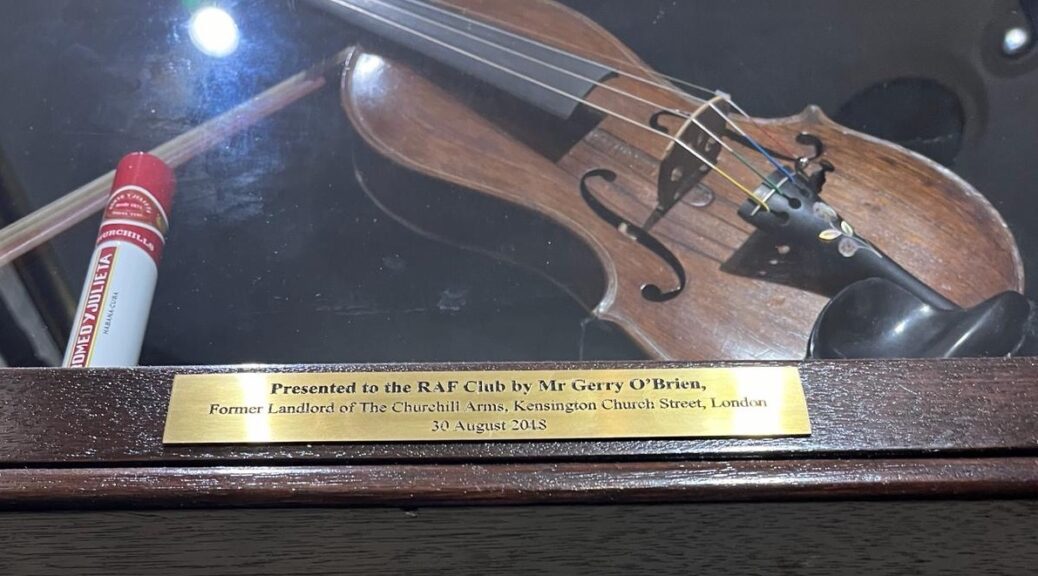
"It is not widely known that Churchill once bought a cheap violin and essayed to prepare himself for the concert stage. The fancy passed. Unlike bricklaying, the musical art was tougher than it looked. About all he got out of it was a witticism from Philip Snowden, a government opponent, who said, 'I understand that Winston has taken up a new pastime—fiddling, and very appropriate, too.'" —Robert Lewis Taylor
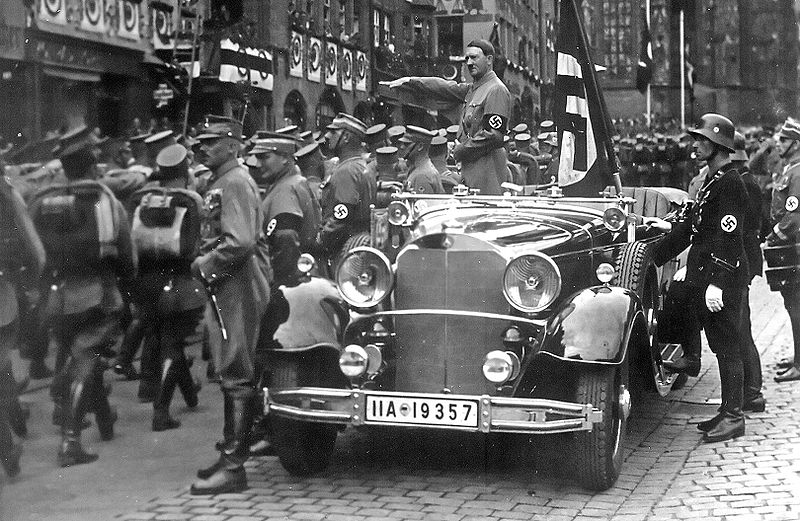
"The astounding thing is that the great German people, educated, scientific, philosophical, romantic, the people of the Christmas tree, the people of Goethe and Schiller, of Bach and Beethoven, Heine, Leibnitz, Kant and a hundred other great names, have not only not resented this horrible blood-bath, but have endorsed it and acclaimed its author with the honours not only of a sovereign but almost of a god.... Can we really believe that a hierarchy and society built upon such deeds can be entrusted with the possession of the most prodigious military machinery yet planned among men? —WSC, 1937
"Winston was enormously witty. He spoke of 'this great country nosing from door to door like a cow that has lost its calf, mooing dolefully, now in Berlin and now in Rome—when all the time the tiger and the alligator wait for its undoing.' Don't be worried, my darling. I am not going to become one of the Winston brigade. —Harold Nicolson, March 1938.
"But really he has got guts, that man. Imagine the effect of his speech in the Empire and the USA. I felt a great army of men and women of resolution watching for the fight. And I felt that all the silly people were but black-beetles scurrying into holes." —Harold Nicolson, July 1940
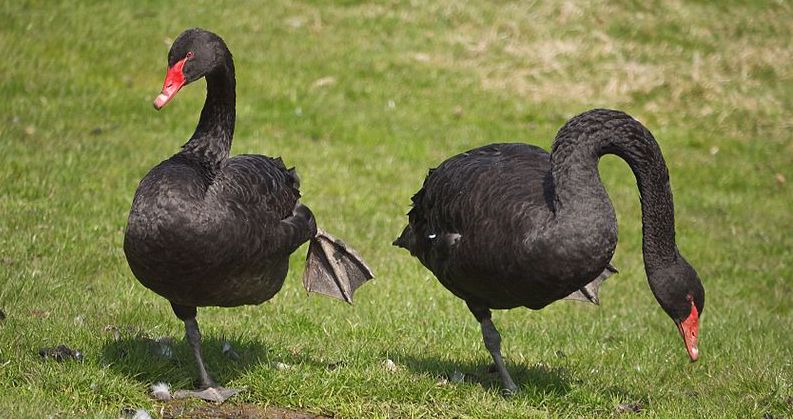
"Mr. Churchill frequently engaged the birds in 'swan-talk,' in which he claimed exclusivity. In fact, the swans would cry out to anyone who approached within a certain distance. Some time after this discovery that I was walking down to the lake with Mr. Churchill. I was a little in front, and watched carefully for the critical spot. I then called out in 'swan-talk' and the birds dutifully replied to me. Mr. Churchill stopped dead. I turned round and he looked me full in the eye for a moment or two. Then the faintest suspicion of a smile appeared and he walked on in silence. No comment was ever made that this secret was shared." —Ronald Golding
As supporters of Israel argue over the civilian casualties in Gaza, this history lesson is relevant. It seems that civilian casualties only occur to leaders of civilized governments. Hitler, Stalin, Saddam Hussein, and certainly Hamas never worried about them. In 1944, the arguments, heart searchings and constant changes of targets continued almost up to D-Day. In 1945, the battle of Manila resulted in 250,000 civilian casualties including 100,000 deaths. When told that statistic recently, Prime Minister Netanyahu was astonished. "100,000...well, we have incurred considerably fewer."
"Don't worry about attacks on Churchill. He is alive and kicking and haunts the British imagination like no other. He will always be caricatured, as he was in his lifetime. But freedom of speech and expression was one of the things he fought for, and in his time he gave as good as he got. The more provocative comments about him are a backhanded tribute, as they work on the assumption that most people admire him." —Paul Addison
Winston Churchill was fighting for national health services when Nye Bevan was still in short pants. After July 1945, national health policy fell to Labour, Robert Colville writes: "In other words, we owe to Bevan not THE National Health Service but THIS National Health Service—the one that turned the existing profusion of provision into something regimented, standardised, centralised and nationalised.... Bevan’s role in persuading America to enter the war is grossly overblown; his enthusiasm for Soviet Russia completely unmentioned. In John Bew’s biography of Attlee, Bevan’s index entry starts with 'tries to undermine Attlee and his supporters,' and goes on from there."
<> Among fake quotations, this one is famous. It was revived by broadcaster Trevor Phillips in The Times. Mr. Phillips was explaining that British Conservatives, almost certainly to be the Opposition after the next election, need to stand strong—particularly against themselves. No quarrel with his logic, only his attribution.
There’s always been something faintly concerning to important or fancy people about national anthems. Early on, the disenchantment was relatively trivial. During Queen Victoria’s Jubilee in 1897, Lady Randolph Churchill arranged for a young man with a music box to play God Save the Queen whenever Her Majesty sat down in her Jubilee dress. When she rose, the song stopped, only to recommence when she sat down again. Nowadays, the critics are more frantic, and most lyrics have been forgotten.