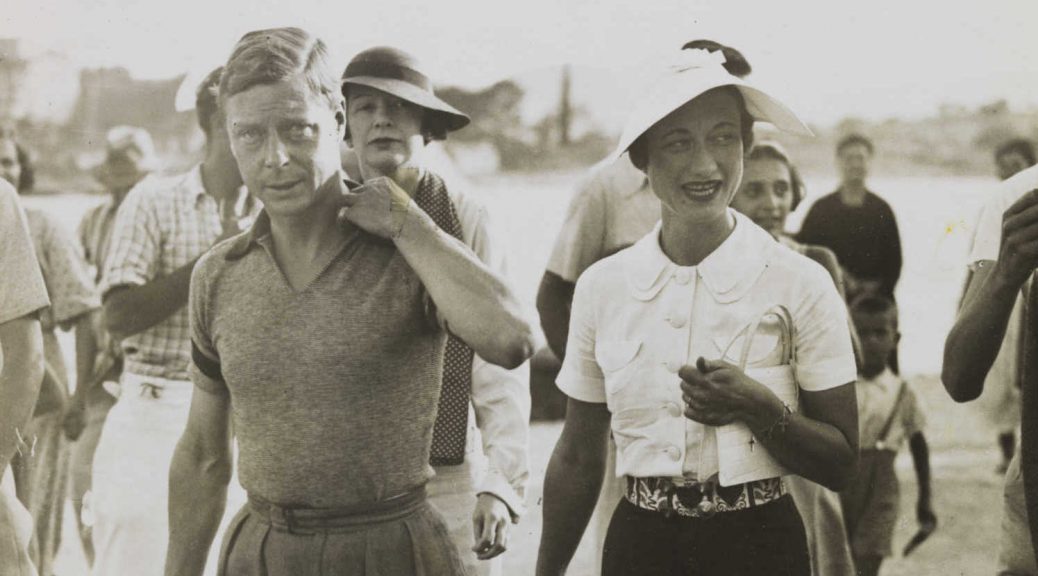
Troublesome Toffs: The Duke of Windsor and Bendor Westminster
“A fully equipped Duke costs as much to keep as two Dreadnoughts; and Dukes are just as great a terror and they last longer.”
The wisecrack, wrongly attributed to Churchill, was actually uttered by his Liberal ally, David Lloyd George. (Allegedly LG said it in 1909, during their battle to reform the House of Lords,) It didn’t make Churchill more welcome at Blenheim Palace, where his cousin the Duke of Marlborough forbade the name of LG in conversation.
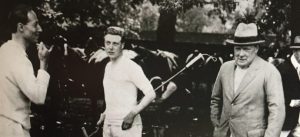
The Duke of Windsor (formerly King Edward VIII) and the 2nd Duke of Westminster are occasionally attacked for their “near-treasonous activity in support of the Third Reich.” Some add that Winston Churchill did not turn against those “top toffs,” both of whom were for a time his friends.
“Near-treasonous” is going some in describing their activities. They may have been toffs, but they counted for little in the scheme of things, and, Churchill did try to silence them.
“Little Windsor”
The Duke of Windsor (as he became after abdicating in 1936) certainly had much to be modest about. He paid a social call on the Führer in Berlin and gave what looked like a Nazi salute. In 1940 Churchill got him out of Europe by appointing him Governor of the Bahamas. There he did not rehash his prewar pro-Nazi statements. Still, descendants of prominent Bahamians still remember the kerfuffles in Nassau during his tenure. Back home, writes Warren Kimball in Forged in War, 54, he caused Churchill
“some embarrassment.” He apparently thought the Germans would win…. Churchill claimed that the Duke’s “loyalties are unimpeachable,” while the documents available suggest that he was obsessed with matters of personal privilege and, like all the Windsors, with the safety of the dynasty. Nevertheless, one plausible tale has the Duke sending a message in 1940 via Fulton Oursler, an American journalist who had access to Roosevelt, asking if the President “would consider intervening as a mediator when, as and if the proper time arrives?”…. FDR, who apparently already knew of the proposal, contemptuously commented: “When little Windsor says he doesn’t think there should be a revolution in Germany, I tell you, Fulton, I would rather have April’s [Oursler’s teenage daughter] opinion on that than his.”
“The will of the nation…”
The other Duke, “Bendor” Westminster (nicknamed for the “Bend’Or” in his coat of arms) was a greater embarrassment. He joined the anti-semitic Right Club and the Parliamentary Peace Aims Group in 1939, claiming to be in touch with “Nazi moderates.” The British government, wrote historian Julian Jackson, “did not take any of this too seriously. None of the pro-peace peers were first-rank, or even third-rank political figures.” (The Fall of France, 2004, 204.)
Bendor and Churchill were, however, longtime friends, and once the war started, Churchill chided His Grace. From Martin Gilbert, ed., The Churchill Documents, vol. 14 (Hillsdale College Press, 2011), 91-92:
…there are some very serious and bad things in [your Peace Aims Group statements]…. When a country is fighting a war of this kind, very hard experiences lie before those who preach defeatism and set themselves against the main will of the nation.
Bendor sent a dissembling reply and Churchill fired back with a more pointed message. From Churchill Archives Centre, Churchill Papers, CHAR 19/2A/19-20:
…in time of peace, people in a free country have a right to form their views about foreign policy; but when the country is fighting for its life against a deadly enemy, there are grave dangers in taking a hostile line to the decided plan….[Especially your] suggesting that all we were fighting for was to make money for the Jews and international finance, or words to that effect.
After that, the Duke subsided, and the Peace Aims Group disappeared after the bombs started falling on London.
Winston Churchill had a lot of loyalty toward his friends. But with the two Dukes, he certainly was aware of the problems and acted to squelch them.

One thought on “Troublesome Toffs: The Duke of Windsor and Bendor Westminster”
Well done Richard!
— Former Coast Guard Person